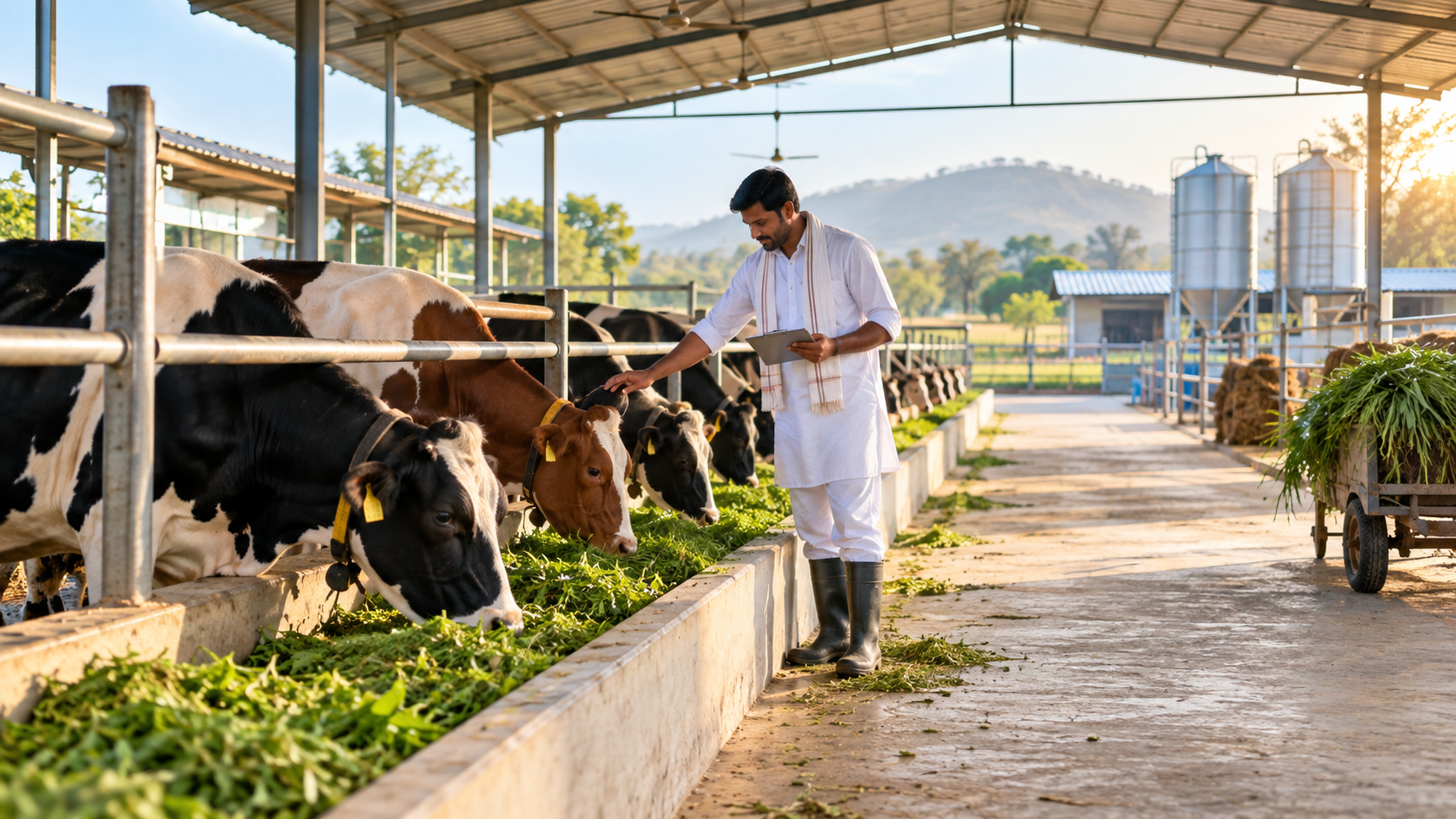
Discover essential cattle farming practices in India, including animal selection, feeding, housing, health management, breeding, hygiene and sustainable dairy farming.
Cattle Farming in India: A Complete Guide for Dairy Farmers
Cattle farming is an important part of India's dairy and livestock sector. For farmers, dairy cattle can provide milk, manure and an opportunity to develop a long-term agricultural business. However, successful dairy farming requires proper planning and consistent animal management.
Modern cattle farming focuses on several important areas, including animal selection, balanced nutrition, fodder management, comfortable housing, healthcare, breeding, hygiene and farm records.
What Is Cattle Farming?
Cattle farming is the rearing and management of cattle for purposes such as milk production, breeding and other agricultural activities.
In a dairy farm, the objective is not simply to keep more animals. Farmers need to maintain healthy animals and create suitable conditions for good productivity and long-term herd management.
Important areas of cattle farming include:
-
Animal selection
-
Balanced feeding
-
Green and dry fodder management
-
Clean cattle housing
-
Animal healthcare
-
Breeding management
-
Hygienic milking
-
Farm record keeping
Importance of Cattle Farming in India
India has a large livestock and dairy sector, making cattle farming an important activity for rural communities.
A well-managed dairy farm can become part of an integrated farming system. Farmers can combine livestock with crop production, fodder cultivation and manure management.
Cattle farming can therefore contribute not only to milk production but also to the broader agricultural ecosystem.
1. Selecting Healthy Dairy Cattle
Choosing suitable animals is one of the first steps in dairy farm management.
Farmers should consider:
-
Breed characteristics
-
Age
-
Body condition
-
Udder development
-
Previous milk performance
-
General health
-
Reproductive history
-
Adaptability to the local environment
Animal selection should ideally involve proper observation and, where necessary, guidance from qualified livestock professionals.
2. Balanced Feeding and Nutrition
Nutrition plays a major role in dairy animal management.
A dairy animal's feeding programme may include green fodder, dry fodder, concentrate feed and mineral supplementation according to its nutritional requirements.
Good feeding management should focus on:
-
Quality fodder
-
Appropriate feed quantities
-
Clean drinking water
-
Mineral supplementation when required
-
Consistent feeding practices
-
Proper storage of feed and fodder
The nutritional needs of animals can differ according to age, body condition, milk production and physiological stage. Therefore, feeding programmes should be planned accordingly.
3. Green Fodder and Silage Management
Green fodder is an important component of many dairy feeding systems.
Farmers can plan fodder production according to available land, climate and livestock requirements. Silage can also help farmers preserve suitable fodder for periods when fresh green fodder is less available.
Good fodder planning can help maintain consistency in animal nutrition throughout the year.
4. Modern Cattle Housing
A dairy farm should provide animals with a clean, safe and comfortable environment.
Important cattle housing considerations include:
-
Good ventilation
-
Adequate space
-
Proper drainage
-
Clean floors
-
Clean feeding areas
-
Accessible drinking water
-
Protection from extreme weather
-
Regular manure removal
Clean and well-planned housing also makes daily farm activities such as feeding, cleaning, observation and milking easier.
5. Cattle Health Management
Healthy animals are an important foundation of a dairy farm.
Farmers should regularly observe animals for changes in:
-
Appetite
-
Behaviour
-
Movement
-
Body condition
-
Milk production
-
General appearance
Preventive healthcare may include vaccination, deworming and regular veterinary guidance according to local recommendations.
If an animal shows signs of illness, professional veterinary advice should be sought promptly.
6. Breeding and Reproductive Management
Reproductive management is another important part of dairy farming.
Farmers should maintain records related to:
-
Heat detection
-
Breeding or artificial insemination
-
Pregnancy
-
Calving
-
Calf information
-
Reproductive problems
Proper records help farmers understand herd performance and plan future breeding and herd-management decisions.
7. Hygienic Milking Practices
Milk quality starts at the farm.
Before and during milking, farmers should pay attention to:
-
Clean hands
-
Clean udders
-
Clean milking equipment
-
Clean containers
-
Hygienic surroundings
-
Proper milk handling and storage
Good milking hygiene helps support clean milk production and better farm-level quality management.
8. Importance of Dairy Farm Records
Record keeping helps farmers understand what is happening on their farm.
Useful records can include:
-
Animal identification
-
Daily milk production
-
Feed usage
-
Vaccination
-
Deworming
-
Breeding
-
Calving
-
Veterinary treatments
-
Farm expenses
With accurate records, farmers can compare animal performance and identify management issues more effectively.
9. Farm Hygiene and Biosecurity
Farm hygiene goes beyond cleaning the cattle shed.
Farmers should also pay attention to:
-
Clean feeding and watering areas
-
Proper manure management
-
Equipment hygiene
-
Animal movement
-
Monitoring newly introduced animals
-
General farm sanitation
These practices can contribute to a healthier farm environment.
10. Sustainable Cattle Farming
Sustainable dairy farming focuses on responsible use of farm resources while maintaining animal health and productivity.
Farmers can explore practices such as:
-
Fodder cultivation
-
Silage preparation
-
Efficient water management
-
Manure utilization
-
Responsible feed management
-
Appropriate technology
-
Farm record management
Integrating livestock with crop and fodder production can also support a more connected agricultural system.
The Future of Dairy Farming in India
The future of cattle farming is increasingly connected with scientific knowledge, farmer training, animal healthcare, better nutrition and technology.
Modern dairy farming is moving towards more organized management, better record keeping and greater attention to animal welfare and resource efficiency.
At AS Dairy, our vision is to contribute to a stronger and more sustainable dairy ecosystem by connecting livestock development, farming practices, farmer participation and responsible dairy management.
Conclusion
Successful cattle farming requires a complete approach rather than focusing on a single factor.
Healthy animals, suitable nutrition, quality fodder, comfortable housing, preventive healthcare, reproductive management, hygienic milking and accurate farm records all contribute to effective dairy farm management.
By adopting responsible and scientific farming practices, dairy farmers can work towards building healthier herds and a more organized dairy enterprise.
AS Dairy — Building a New Era of Farmers.
Frequently Asked Questions
What is cattle farming?
Cattle farming is the rearing and management of cattle for milk production, breeding and other agricultural purposes.
What is important for successful dairy farming?
Animal selection, nutrition, fodder, housing, healthcare, breeding, hygiene and record keeping are important parts of dairy farm management.
Why is balanced cattle feed important?
Balanced nutrition helps provide animals with nutrients according to their requirements and supports overall health and productivity.
How can farmers maintain cattle health?
Regular observation, proper nutrition, suitable vaccination and deworming practices, clean housing and timely veterinary consultation are important.
Why is cattle farm hygiene important?
Clean housing, feeding areas, equipment and proper manure management help create a healthier farm environment.
How can technology help dairy farmers?
Technology can support areas such as animal identification, health monitoring, feeding, milking and farm record management.