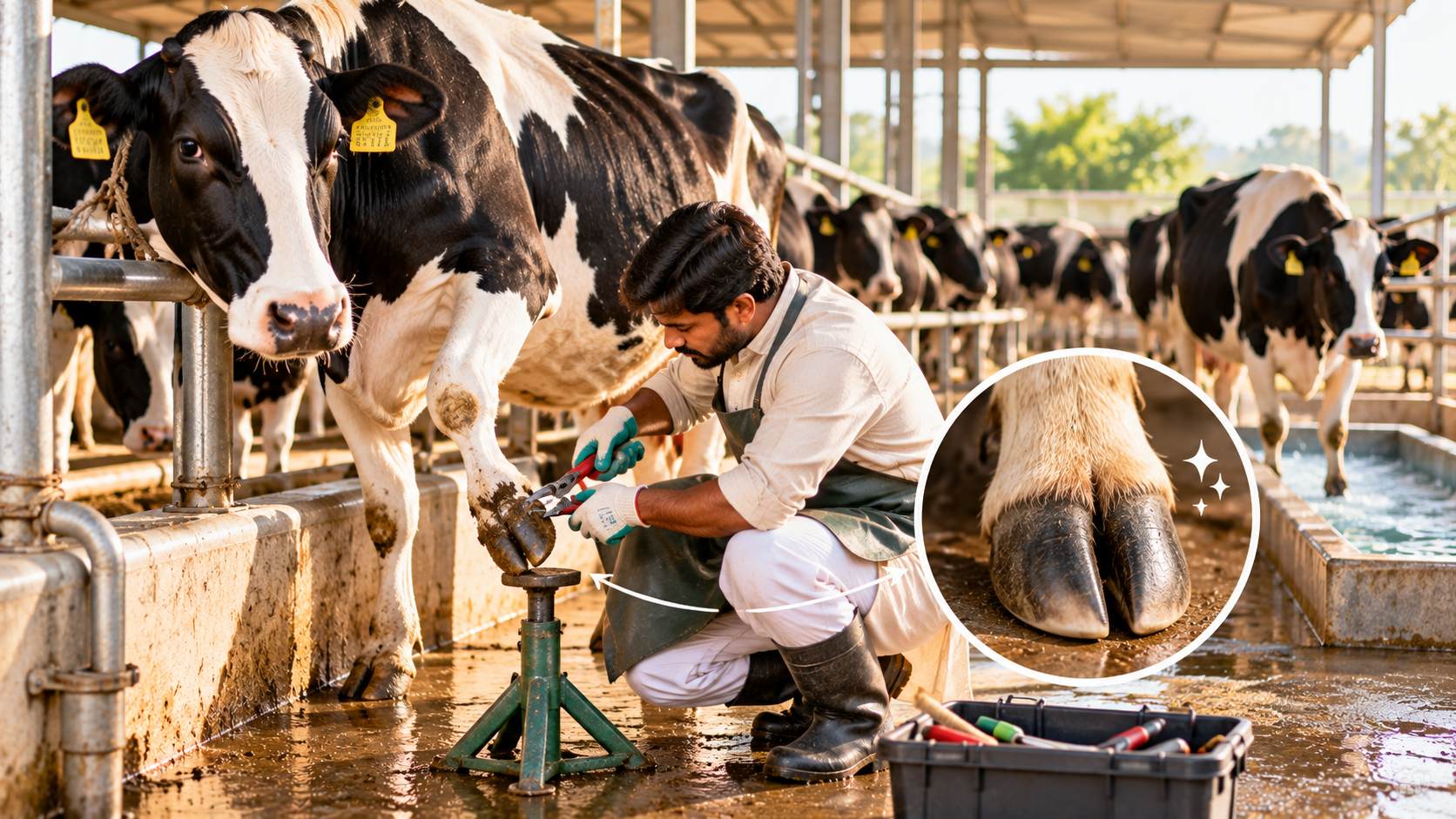
Learn why proper hoof care is essential for dairy cattle and how regular inspection, trimming, clean flooring, hygiene, and good nutrition can support animal health and productivity.
Why Hoof Care Matters in Dairy Cattle: A Practical Guide for Farmers
Healthy hooves are an important part of dairy cattle management. Farmers often focus on feeding, milk production, housing and general health, but the condition of an animal's feet and hooves can also affect its comfort, movement and productivity.
Dairy cattle spend a significant amount of time standing and walking. If the hooves become overgrown, injured or affected by disease, animals may experience discomfort or lameness.
The National Dairy Development Board (NDDB) highlights regular hoof care as an important practice, especially for high-yielding dairy animals. NDDB
Why Are Healthy Hooves Important?
Hooves support the animal's body and help it stand and move comfortably.
Healthy hooves can support:
- Normal walking
- Comfortable standing
- Regular feeding and drinking
- Access to resting areas
- Normal animal behaviour
- Better overall animal welfare
When an animal develops lameness, its movement may become restricted and its normal activities can be affected.
Therefore, hoof care should be considered part of routine dairy cattle health management.
1. Check Hooves Regularly
Farmers should observe the hooves of their cattle regularly.
Look for:
- Swelling
- Cuts or injuries
- Cracks
- Unusual hoof shape
- Bad smell
- Redness
- Discharge
- Difficulty walking
- Uneven weight bearing
Early observation can help farmers identify potential problems before they become more serious.
2. Regular Hoof Trimming Is Important
Hooves can become overgrown when natural wear does not keep pace with hoof growth.
Overgrown hooves can affect the way an animal walks and stands.
NDDB recommends regular hoof trimming and notes that hoof trimming at least once in six months can be part of prevention and management of hoof-related problems. NDDB
The exact trimming schedule should depend on the animal, housing system, flooring and hoof condition.
Hoof trimming should preferably be performed by a trained person or qualified professional.
3. Maintain Suitable Flooring
Flooring has a direct effect on hoof health.
Rough, slippery or unsuitable flooring can increase the risk of injuries and lameness.
NDDB identifies rough or irregular flooring as one of the factors associated with laminitis and recommends soft flooring as part of prevention. NDDB
A good cattle floor should provide:
- Adequate grip
- Comfortable standing
- Proper drainage
- Easy cleaning
- Reduced risk of slipping
Farmers should regularly inspect the flooring for sharp edges, damaged surfaces and excessive slipperiness.
4. Keep Walking Areas Clean and Dry
Moisture and poor hygiene can contribute to hoof-related problems.
Farmers should keep:
- Walking areas clean
- Resting areas dry
- Drainage channels functional
- Manure removed regularly
- Water leakage under control
Good farm hygiene supports a healthier environment for the herd.
5. Foot Bath Can Support Hoof Hygiene
Foot baths can be used as part of a farm's hoof-health management programme.
NDDB notes that regular foot baths can be useful in preventing foot rot. NDDB
However, the solution, concentration, frequency and procedure should be selected according to veterinary or professional recommendations.
Farmers should not use chemicals or treatments randomly.
6. Watch for Signs of Lameness
Lameness is one of the most important signs that a hoof or leg problem may be present.
Farmers may notice:
- Uneven walking
- Reluctance to walk
- Spending more time lying down
- Difficulty standing
- Abnormal posture
- Reduced movement
- Reduced feed or water access
NDDB lists signs such as arched back, cross-legged standing and sole ulcers among signs associated with laminitis. NDDB
If an animal is clearly lame or in pain, veterinary examination should not be delayed.
7. Give Animals Enough Resting Space
Animals need enough space to stand, walk and lie down comfortably.
NDDB recommends adequate lying space as part of laminitis prevention because excessive standing can contribute to hoof stress. NDDB
Good housing should allow animals to:
- Lie down comfortably
- Stand without crowding
- Move safely
- Reach feed and water
- Access resting areas
8. Nutrition Also Matters for Hoof Health
Hoof health is not only about trimming and flooring.
Nutrition also plays an important role in overall animal health.
NDDB recommends balanced feed with sufficient forage as part of laminitis prevention. NDDB
Farmers should provide diets appropriate to the animal's:
- Age
- Body condition
- Milk production
- Physiological stage
Sudden dietary changes should be avoided, and ration planning should be done with appropriate professional guidance.
9. Pay Special Attention to High-Yielding Animals
High-producing dairy animals can require additional attention because hoof problems may become more significant during demanding stages of production.
NDDB specifically notes that hoof care is essential in high-yielding animals. NDDB
Farmers should therefore include hoof inspection in routine health checks for high-producing cows and buffaloes.
10. Seek Veterinary Help When Problems Appear
Not every hoof problem can be managed through routine trimming or cleaning.
Professional veterinary assistance should be considered when an animal shows:
- Severe lameness
- Swelling
- Bleeding
- Deep wounds
- Persistent pain
- Severe hoof deformity
- Difficulty standing
- Sudden inability to walk normally
Early professional attention can help identify the underlying cause and prevent further complications.
Simple Hoof-Care Routine for Dairy Farmers
Farmers can include the following checks in their routine:
Daily
- Observe walking behaviour
- Check for obvious injuries
- Keep floors clean
- Remove manure and standing water
Regularly
- Inspect hooves closely
- Check flooring condition
- Monitor for overgrown hooves
- Maintain appropriate foot-care practices
When Required
- Arrange professional hoof trimming
- Seek veterinary examination
- Follow recommended foot-bath practices
- Review flooring or housing problems
Common Hoof-Care Mistakes to Avoid
Farmers should avoid:
- Ignoring animals that walk abnormally
- Allowing hooves to become excessively overgrown
- Keeping animals on damaged flooring
- Allowing manure and water to accumulate
- Trimming hooves without proper knowledge
- Delaying veterinary attention for severe lameness
- Making sudden feed changes
Consistent management is usually more effective than waiting for serious problems to develop.
Building a Hoof-Friendly Dairy Farm
A hoof-friendly dairy farm does not necessarily require expensive equipment.
Farmers can begin with basic practices:
Clean Flooring
Good Drainage
Dry Resting Areas
Regular Hoof Inspection
Professional Trimming
Balanced Nutrition
Adequate Resting Space
Timely Veterinary Care
Together, these practices can support better animal comfort and responsible dairy management.
Conclusion
Hoof care is an important but sometimes overlooked part of dairy cattle management.
Healthy hooves help animals walk, stand, feed and rest comfortably. Regular inspection, suitable flooring, clean and dry surroundings, appropriate nutrition and professional hoof trimming can help reduce the risk of hoof-related problems.
Farmers should pay particular attention to high-yielding animals and seek veterinary advice when an animal shows persistent lameness or signs of pain.
At AS Dairy, we believe that responsible dairy farming begins with healthy animals, proper care and scientific farm management.
AS Dairy — Building a New Era of Farmers.
Frequently Asked Questions
How often should dairy cattle hooves be trimmed?
The schedule depends on the animal and farm conditions. NDDB recommends regular hoof trimming and notes that trimming at least once in six months can be part of hoof-health management. NDDB
What are signs of hoof problems in cattle?
Uneven walking, lameness, abnormal posture, swelling, hoof cracks, wounds and difficulty standing can indicate a hoof or leg problem.
Why is flooring important for hoof health?
Rough, irregular or slippery flooring can increase the risk of injury and lameness. Suitable flooring should provide grip, comfort and proper drainage. NDDB
Is foot bathing useful for cattle?
Foot baths can be useful as part of hoof-health management, and NDDB notes that regular foot baths can help prevent foot rot. The treatment should follow appropriate professional guidance. NDDB
Do high-yielding dairy animals need extra hoof care?
Yes. NDDB specifically emphasizes the importance of hoof care in high-yielding animals. NDDB