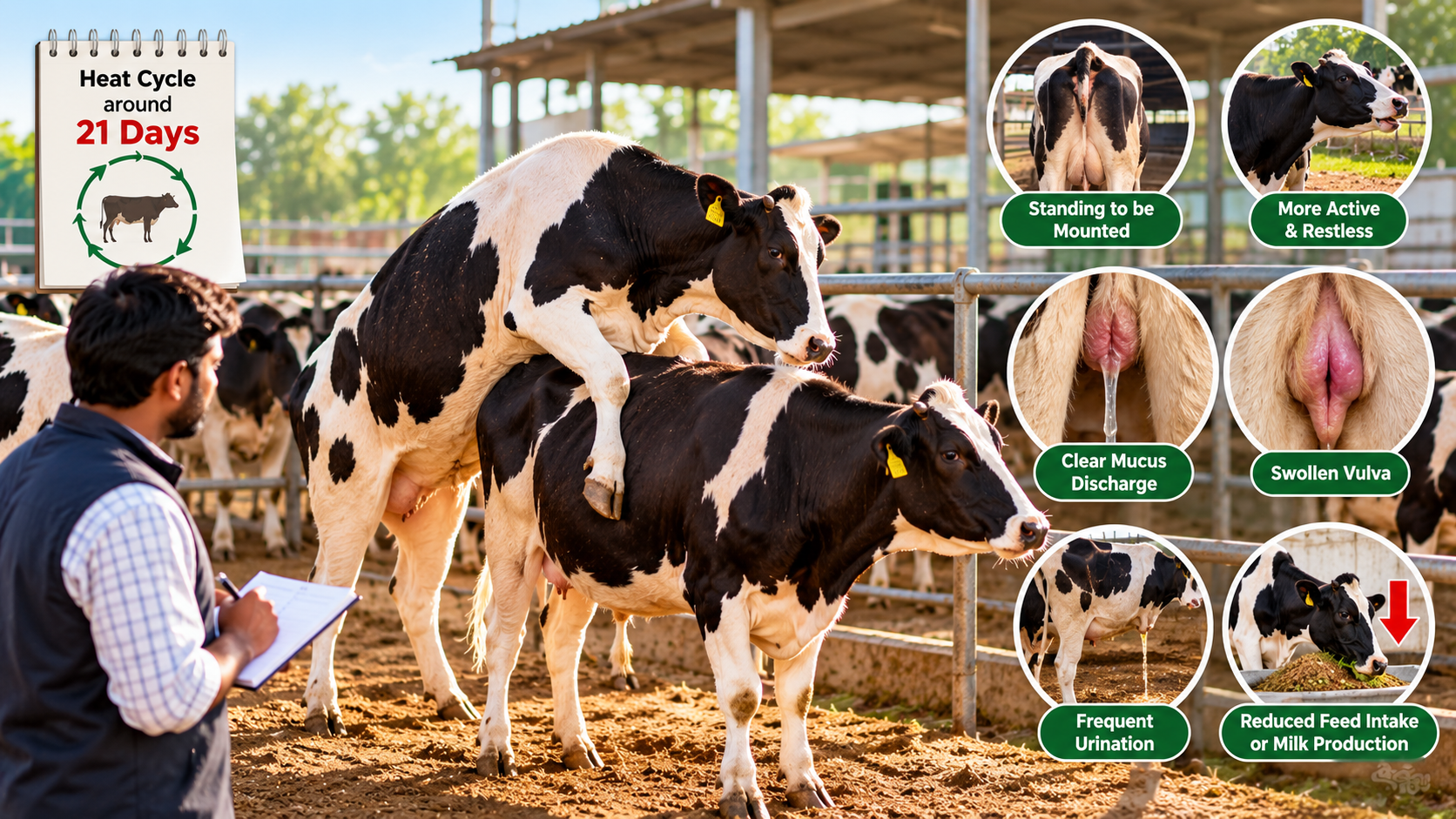
Learn how to identify common signs of heat in dairy cattle and improve breeding management through timely observation, record keeping, and proper care.
How to Identify Heat in Dairy Cattle: A Practical Guide for Farmers
Heat detection is an important part of dairy farm management. Identifying heat at the right time helps farmers plan breeding or artificial insemination (AI) more effectively and maintain good reproductive performance.
According to the National Dairy Development Board (NDDB), common signs of heat include mounting other animals, standing to be mounted, frequent urination, restlessness, swollen vulva, clear mucus discharge, and sometimes reduced feed intake or milk production. National Dairy Development Board
What Is Heat in Dairy Cattle?
Heat, also called estrus, is the period when a mature female animal becomes receptive to mating. For dairy farmers, recognizing this period is important because the timing of insemination has a major effect on the chances of conception.
The heat cycle generally occurs around every 21 days, although the interval can vary between animals. NDDB
Common Signs of Heat in Cattle
Farmers should regularly observe their animals for changes in behaviour and physical condition.
1. Standing to Be Mounted
One of the clearest signs is when a cow stands still while another animal mounts her. This is an important sign of standing heat.
2. Mounting Other Animals
A cow in heat may become more active and may try to mount other cows.
3. Increased Restlessness
The animal may walk more than usual, become restless, or show increased interest in other animals.
4. Frequent Urination
Frequent urination can also be observed during heat.
5. Clear Mucus Discharge
A transparent, stretchy mucus discharge from the vulva is another useful sign of heat. National Dairy Development Board
6. Swollen Vulva
The vulva may appear swollen or slightly red during the heat period.
7. Changes in Feed Intake and Milk Yield
Some animals may show reduced feed intake, and milk production may temporarily decrease during heat. National Dairy Development Board
Why Regular Observation Is Important
Heat signs may be easy to notice in some cows but less obvious in others. Farmers should observe their animals regularly, especially during the early morning and evening when behavioural signs may be easier to identify.
Maintaining simple records of heat dates, insemination dates, calving dates, and pregnancy status can also help farmers manage breeding more efficiently.
Heat Detection in Buffaloes
Buffaloes can be more difficult to manage because their heat symptoms may be less noticeable. NDDB notes that buffaloes can experience “silent heat,” where behavioural signs are weak or present only for a short period. National Dairy Development Board
For buffaloes, farmers should pay close attention to subtle behavioural and physical changes and maintain proper breeding records.
When Should Artificial Insemination Be Done?
Correct timing is important for successful artificial insemination. NDDB recommends insemination at the appropriate stage after heat is detected; its farmer guidance commonly uses the morning-evening rule: an animal detected in heat in the morning is generally inseminated in the evening, while an animal detected in heat in the evening is generally inseminated the following morning. The final decision should be made by the qualified AI technician after confirming the heat stage. National Dairy Development Board
Farmers should avoid making breeding decisions based only on one symptom.
Nutrition and Fertility
Good nutrition is closely connected with reproductive performance. Balanced feeding, adequate energy, protein, vitamins, minerals, and proper overall animal care can support fertility.
NDDB notes that feeding and management are important factors affecting fertility in dairy animals. National Dairy Development Board
Keep Proper Breeding Records
A simple farm record can include:
- Animal identification number
- Date of heat detection
- Visible heat symptoms
- Date of AI or natural service
- Name/type of semen used, where applicable
- Pregnancy examination date
- Expected calving date
- Actual calving date
These records can help farmers identify missed heats and plan future breeding activities more effectively.
What Farmers Should Do When Heat Is Detected
When an animal shows clear signs of heat:
- Observe the animal carefully.
- Record the date and approximate time.
- Contact a qualified AI technician or veterinarian.
- Follow the recommended insemination timing.
- Continue observing the animal after AI.
- Maintain the breeding record for future reference.
What If the Animal Does Not Become Pregnant?
If an animal repeatedly fails to conceive, farmers should not continue insemination without investigating the reason.
Poor heat detection, incorrect insemination timing, nutritional problems, reproductive disorders, or other management issues can affect conception. A veterinarian should evaluate animals with repeated breeding problems.
Conclusion
Accurate heat detection is one of the most important parts of reproductive management on a dairy farm. By observing cattle regularly, recognizing common heat signs, maintaining proper records, providing balanced nutrition, and taking professional advice at the right time, farmers can improve breeding management and support better dairy farm productivity.
AS Dairy — Building a New Era of Farmers.