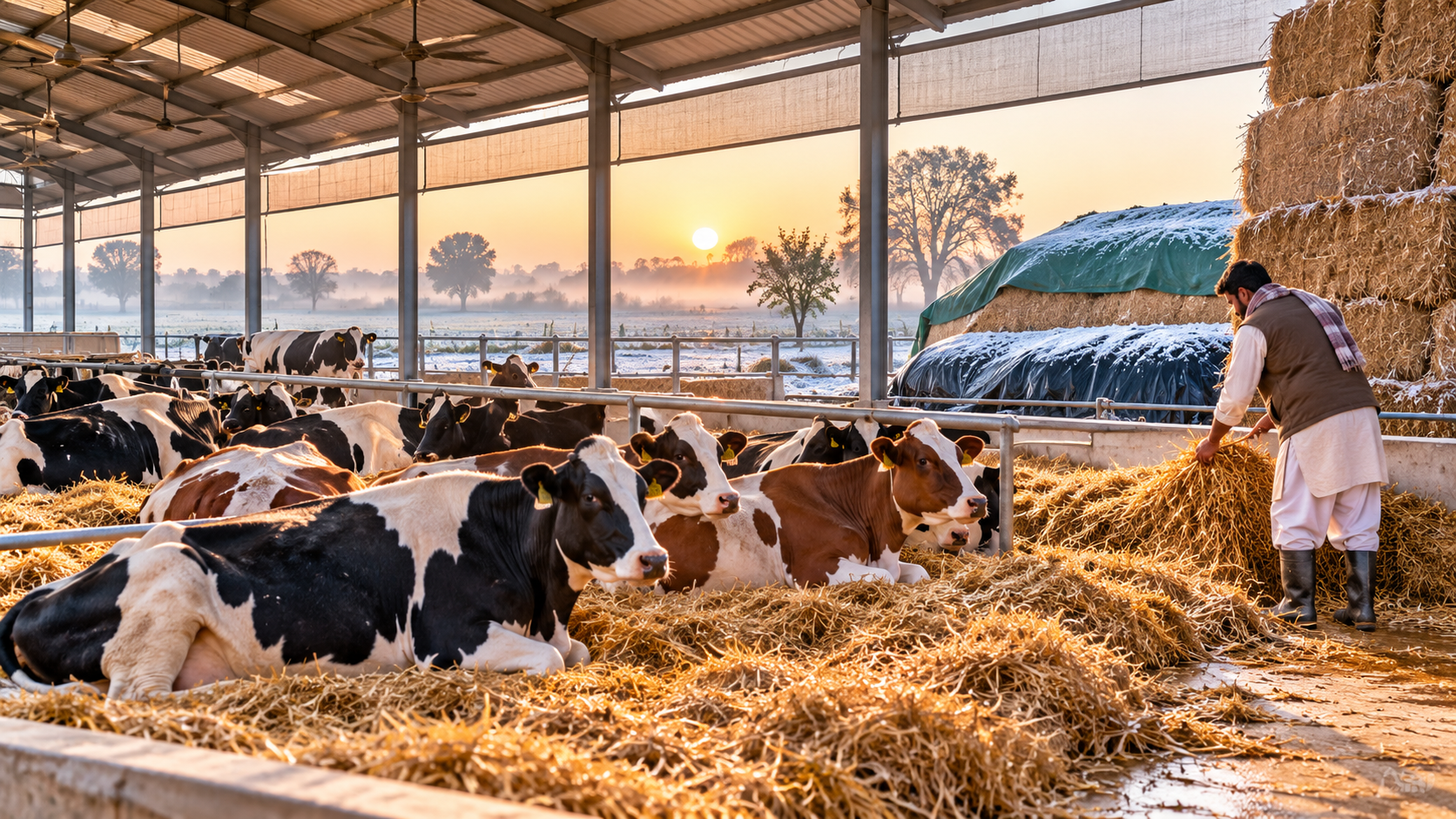
Learn how to prepare dairy cattle for winter with proper housing, dry bedding, nutrition, fodder storage, clean water and regular health care.
How to Prepare Dairy Cattle for Winter: Housing, Feeding & Health Care
Winter brings changes in temperature, fodder availability, housing requirements and daily cattle management. Dairy farmers need to prepare their animals before temperatures become significantly colder.
Proper winter management is not about keeping cattle completely closed indoors. Instead, the goal is to provide a clean, dry and comfortable environment while maintaining good ventilation, nutrition, water availability and regular health observation.
For dairy farmers, early preparation can make winter cattle management more organized and practical.
Why Is Winter Preparation Important for Dairy Cattle?
Cold weather can affect animals differently depending on their age, health, body condition, breed and housing conditions.
Calves, older animals and animals that are already weak or unwell may require additional attention during colder weather. ICAR advisories specifically highlight calves and older or previously unhealthy animals as groups that can be more susceptible to cold stress. Indian Council of Agricultural Research
A good winter-management plan should therefore focus on:
- Comfortable housing
- Dry bedding
- Proper nutrition
- Clean drinking water
- Good ventilation
- Regular health observation
- Protection from cold winds
1. Prepare the Cattle Shed Before Winter
The cattle shed should be inspected before the colder season begins.
Farmers should check:
- Roof condition
- Flooring
- Drainage
- Doors and openings
- Wind exposure
- Bedding area
- Feeding area
- Drinking-water area
The shed should protect animals from cold winds and excessive moisture while still allowing adequate ventilation.
NDDB recommends that dairy animals should have housing that protects them from extreme weather conditions, including winter. National Dairy Development Board
2. Keep the Bedding Dry and Clean
Wet flooring can make winter conditions more uncomfortable for cattle.
Farmers should maintain dry bedding and remove wet or contaminated material regularly.
Depending on the farm system, suitable bedding materials can include clean dry straw or other locally appropriate materials.
The important points are:
- Keep the resting area dry
- Remove wet bedding
- Prevent manure accumulation
- Maintain good drainage
- Replace bedding when necessary
A dry resting area is particularly important for calves and young animals.
3. Protect Animals From Cold Winds
Cold air entering directly into the resting area can make animals uncomfortable.
Farmers can reduce direct exposure to strong winds by using suitable shed arrangements or temporary coverings where appropriate.
However, the shed should not be completely sealed.
Protection from cold wind + adequate ventilation should be maintained together.
Poor ventilation can lead to moisture and poor air quality inside the shed.
4. Maintain Good Ventilation
During winter, farmers may be tempted to close every opening in the cattle shed.
This should be avoided.
Good ventilation helps remove excess moisture and maintain better air quality.
The objective should be to:
- Reduce direct cold drafts
- Maintain fresh air
- Prevent excessive moisture
- Keep the shed dry
- Avoid overcrowding
A comfortable and ventilated cattle shed is an important part of good dairy housing management. National Dairy Development Board
5. Pay Special Attention to Calves
Young calves can be more sensitive to cold conditions.
Farmers should make sure calves have:
- Dry bedding
- Protection from direct cold winds
- Clean housing
- Adequate nutrition
- Regular observation
Calves should be checked more frequently when temperatures fall.
If a calf appears weak, unusually inactive or unwell, veterinary advice should be sought.
6. Review the Winter Feeding Plan
Cold weather can increase the importance of maintaining adequate nutrition, especially when animals are exposed to lower temperatures.
Farmers should review:
- Green fodder availability
- Dry fodder stocks
- Concentrate feed
- Mineral supplementation
- Silage availability
- Feed storage
ICAR advisories recommend preparing hay and silage as reserve fodder for periods when fresh fodder availability may be limited. Indian Council of Agricultural Research
Feed quantities should be planned according to the animal's age, body condition, milk production and physiological stage rather than using the same ration for every animal.
7. Store Enough Fodder in Advance
Winter planning should begin before fodder shortages occur.
Farmers can prepare a fodder inventory that includes:
- Dry fodder
- Hay
- Silage
- Green fodder where available
- Concentrate feed
- Mineral supplements
Proper storage is equally important.
Feed should be protected from:
- Rain
- Excess moisture
- Mold
- Contamination
- Pests
Good fodder storage can help maintain consistent feeding during the winter months.
8. Continue Providing Clean Drinking Water
Cold weather does not mean that animals no longer need water.
Clean drinking water should continue to be available regularly.
Farmers should:
- Check water troughs
- Keep water clean
- Prevent contamination
- Monitor drinking behaviour
- Maintain the water-supply system
Water management should remain part of the daily winter routine.
9. Maintain Regular Health Observation
Winter is a good time to strengthen daily health monitoring.
Farmers should observe:
- Appetite
- Water intake
- Activity
- Body condition
- Coughing or breathing changes
- Nasal discharge
- Milk production
- General behaviour
Any unusual or persistent health change should be discussed with a veterinarian.
Preventive healthcare practices should follow the advice of qualified veterinary professionals and local animal-health programmes.
10. Keep the Cattle Shed Clean
Winter hygiene remains important.
Farmers should regularly remove:
- Manure
- Wet bedding
- Leftover feed
- Standing water
- Other waste
Clean surroundings can help maintain a healthier farm environment.
Good drainage is especially important because moisture combined with cold weather can make housing conditions less comfortable.
11. Give Animals Protection Without Overheating
Winter protection should be balanced.
Excessive covering or closing the shed completely can reduce ventilation and increase moisture.
Instead, farmers should focus on:
Dry housing + protection from strong cold winds + adequate ventilation + proper nutrition
This approach supports a more comfortable environment for the herd.
12. Maintain a Daily Winter Checklist
A simple checklist can help farmers manage the herd consistently.
Morning Check
- Are animals active?
- Is the bedding dry?
- Is drinking water available?
- Is the shed ventilated?
- Is feed available?
Afternoon Check
- Are animals eating normally?
- Is the shed comfortable?
- Is any animal showing unusual behaviour?
Evening Check
- Are animals protected from cold winds?
- Is bedding dry?
- Is enough feed available for the night?
- Are calves comfortable?
Simple observations can help farmers identify problems early.
Common Winter Management Mistakes to Avoid
Farmers should avoid:
- Completely closing the cattle shed
- Keeping animals on wet bedding
- Allowing manure to accumulate
- Ignoring calves during cold weather
- Reducing water availability
- Waiting until fodder stocks are almost finished
- Making sudden feed changes
- Ignoring unusual animal behaviour
Good preparation is generally easier than dealing with avoidable problems later.
Building a Winter-Ready Dairy Farm
A winter-ready dairy farm does not necessarily require expensive infrastructure.
Good management can begin with basic practices:
Clean Housing
Dry Bedding
Good Ventilation
Adequate Nutrition
Clean Water
Regular Health Observation
Proper Fodder Storage
These practices can be adapted according to farm size, local climate and available resources.
Conclusion
Winter dairy management starts with preparation.
Farmers should inspect cattle housing, maintain dry bedding, protect animals from strong cold winds, preserve adequate ventilation, prepare fodder stocks and continue providing clean drinking water.
Special attention should be given to calves, older animals and animals with existing health concerns.
By combining proper housing, nutrition, hygiene and regular observation, farmers can create a more comfortable and well-managed environment for their dairy herd during the colder months.
At AS Dairy, we believe that responsible dairy farming begins with healthy animals, thoughtful management and consistent care.
AS Dairy — Building a New Era of Farmers.
Frequently Asked Questions
How can farmers protect cattle during winter?
Provide clean and dry housing, protect animals from strong cold winds, maintain ventilation, provide adequate nutrition and monitor their health regularly.
Should cattle sheds be completely closed during winter?
No. The shed should protect animals from direct cold winds while maintaining adequate ventilation.
What should calves receive during winter?
Calves should have dry bedding, protection from cold winds, proper nutrition and regular health observation.
Should drinking water be reduced during winter?
No. Clean drinking water should continue to be available regularly.
How can farmers prepare fodder for winter?
Farmers can plan adequate stocks of dry fodder, hay, silage, concentrates and appropriate mineral supplements based on herd requirements.