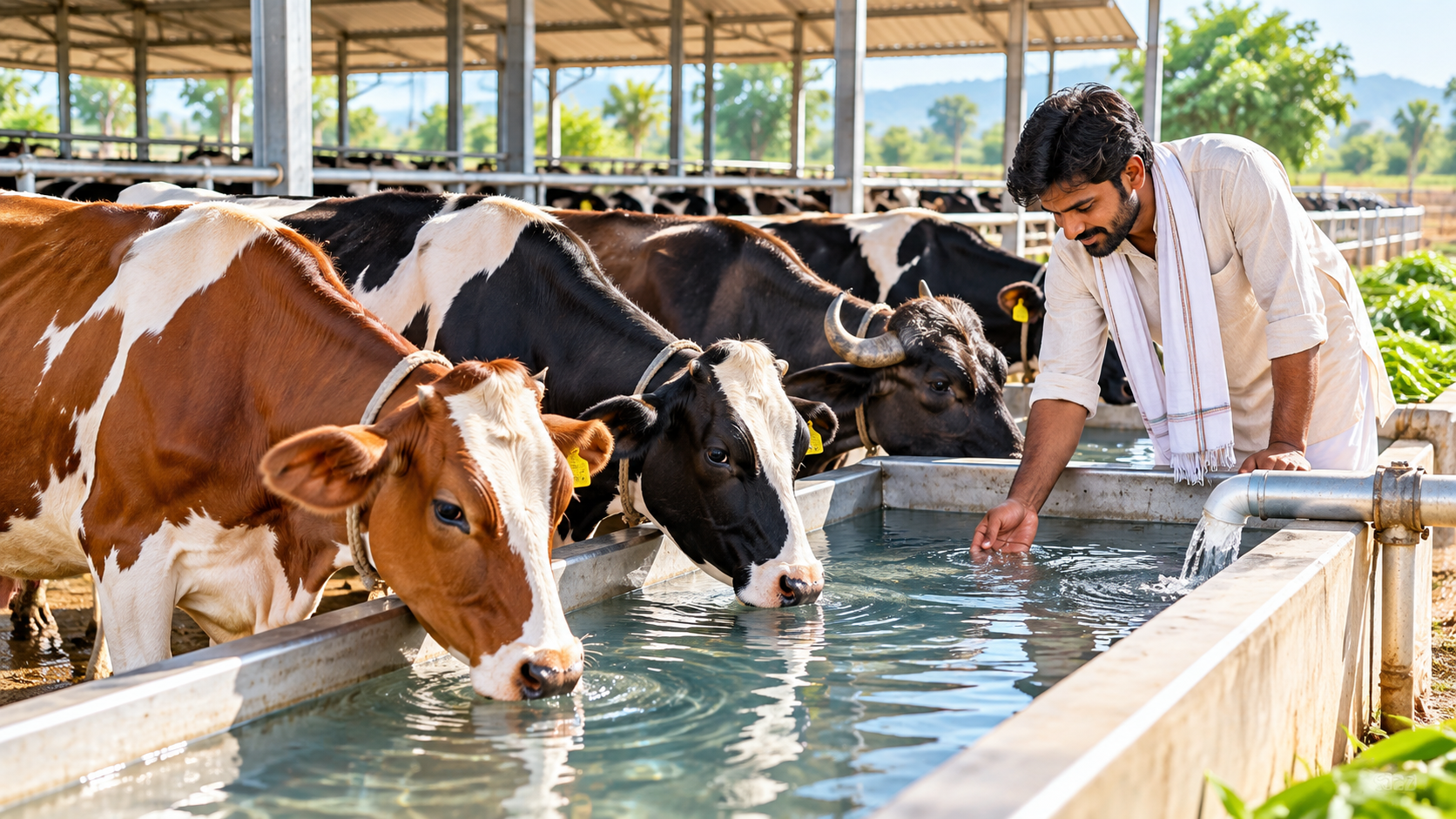
Clean drinking water is essential for dairy cattle. Learn how proper water management supports hydration, digestion, animal health and milk production.
Importance of Clean Drinking Water for Dairy Cattle: A Guide for Farmers
Water is one of the most important parts of dairy cattle management. Farmers often focus on feed, fodder, minerals and housing, but providing clean and adequate drinking water is equally important for maintaining healthy dairy animals.
Water supports digestion, nutrient utilization, waste removal and body-temperature regulation. It is also closely connected with milk production because milk contains a high proportion of water.
For dairy farmers, proper water management should therefore be an important part of everyday cattle care.
Why Is Water Important for Dairy Cattle?
Water performs several essential functions in the body of cattle and buffaloes.
It helps with:
-
Digestion of feed and fodder
-
Transport of nutrients
-
Removal of waste from the body
-
Regulation of body temperature
-
Normal body functions
-
Milk production
According to the National Dairy Development Board (NDDB), a healthy adult dairy animal may require around 75–80 litres of water per day under normal conditions. Actual requirements can vary depending on milk production, weather, feed and the animal's physical condition.
This is why farmers should ensure that animals have regular access to clean drinking water.
1. Always Provide Clean Drinking Water
The first priority should be water quality.
Drinking water for dairy animals should be:
-
Clean
-
Fresh
-
Free from visible contamination
-
Easily accessible
-
Available regularly
Water troughs can collect feed particles, mud, manure and other contaminants. Farmers should inspect drinking areas regularly and remove any visible contamination.
Clean water encourages proper water intake and supports better overall farm hygiene.
2. Keep Water Troughs Clean
Providing water is not enough if the drinking area itself is dirty.
Farmers should regularly:
-
Remove leftover feed from the trough
-
Empty dirty water
-
Clean the drinking trough
-
Remove mud and manure
-
Check for algae or deposits
-
Refill the trough with fresh water
The cleaning frequency may vary according to farm conditions, but drinking-water areas should be checked every day.
A clean water source should be considered an essential part of dairy farm hygiene.
3. Milk-Producing Animals Need More Water
Water requirements can increase when an animal is producing milk.
Milk contains a large amount of water, so lactating cows and buffaloes generally need more water than animals that are not producing milk.
According to NDDB, approximately 2.5 litres of additional water may be required for every litre of milk produced.
Therefore, farmers should pay special attention to water availability for high-producing dairy animals.
4. Give Extra Attention During Hot Weather
Weather can have a significant effect on water requirements.
During hot weather, cattle may need more water to help maintain normal body temperature and reduce the effects of heat stress.
Farmers can support animals during hot conditions by:
-
Keeping drinking-water troughs filled
-
Providing clean and fresh water
-
Providing shade
-
Maintaining good ventilation
-
Avoiding unnecessary overcrowding
-
Monitoring animals regularly
Water management should be an important part of summer dairy farm management.
5. Water and Feed Management Work Together
Water and nutrition are closely connected.
Dairy cattle need water for proper digestion and utilization of feed and fodder. Even a well-planned feeding programme should therefore include adequate access to drinking water.
A good dairy nutrition system can be viewed as:
Feed + Fodder + Minerals + Clean Water
Farmers should consider all of these factors when managing the nutrition of their cattle.
6. Make Water Easily Accessible
The location of drinking-water points also matters.
Cattle should be able to reach water easily without unnecessary walking or crowding.
On farms where several animals are kept together, farmers should also observe whether weaker or lower-ranking animals are getting adequate access to water.
Proper placement of water troughs can make daily cattle management easier and more efficient.
7. Check Water During Daily Farm Inspection
Water management can easily become part of a daily farm checklist.
Farmers can check:
Water Quality:
Is the water clean and free from visible contamination?
Water Availability:
Is enough water available for the animals?
Trough Condition:
Is the trough clean and functioning properly?
Animal Behaviour:
Are the animals drinking normally?
Weather:
Has the temperature increased and may water requirements be higher?
Regular observation can help farmers identify problems early.
8. Maintain a Reliable Water Supply
A dairy farm should have a reliable water-supply system.
Problems such as pump failure, electricity interruptions or temporary water shortages can affect daily cattle management.
Farmers can prepare by maintaining:
-
Clean water-storage tanks
-
Properly working pumps
-
Regular equipment maintenance
-
Backup water arrangements
-
Easily accessible water points
Good planning can reduce unnecessary interruptions in water availability.
9. Water Management Is Part of Farm Hygiene
Water management is closely connected with overall farm cleanliness.
Farmers should maintain hygiene around:
-
Drinking-water troughs
-
Feeding areas
-
Milking areas
-
Water-storage tanks
-
Drainage areas
Keeping these areas clean helps create a healthier and more organized farm environment.
10. Observe Changes in Animal Behaviour
Farmers should regularly observe the behaviour of their cattle.
Changes such as:
-
Reduced water intake
-
Reduced feed intake
-
Unusual weakness
-
Reduced activity
-
Signs of heat stress
-
Changes in milk production
may indicate that something needs attention.
These signs can have several possible causes, so farmers should not assume that water is always the reason. If an animal appears unwell or shows persistent changes in behaviour, veterinary advice should be taken.
How Farmers Can Improve Water Management
A simple water-management routine can make a significant difference.
Farmers can follow these practices:
-
Provide clean drinking water regularly.
-
Check water troughs every day.
-
Remove feed, mud and manure from drinking areas.
-
Clean water troughs and tanks regularly.
-
Pay extra attention to water availability during hot weather.
-
Make sure lactating animals can easily access water.
-
Maintain pumps and water-supply equipment.
-
Keep a backup plan for water interruptions.
-
Observe cattle drinking behaviour.
-
Consult a veterinarian when animals show unusual health-related signs.
Water and Sustainable Dairy Farming
Responsible water management is also an important part of sustainable dairy farming.
Water is required not only for animals but also for farm cleaning, fodder cultivation and other dairy-farm activities.
Using water responsibly can help farmers manage their resources more efficiently.
A well-planned dairy farm should therefore consider both animal requirements and responsible resource management.
Conclusion
Clean drinking water is a basic requirement for healthy dairy cattle.
Water supports digestion, nutrient utilization, waste removal, body-temperature regulation and milk production. The amount of water required can vary depending on milk production, feed, weather and the physical condition of the animal.
By keeping drinking areas clean, providing regular access to fresh water, maintaining water-supply equipment and paying extra attention during hot weather, farmers can make water management an important part of good dairy-farm practices.
At AS Dairy, we believe that responsible dairy farming begins with healthy animals, proper nutrition, clean surroundings and consistent care.
AS Dairy — Building a New Era of Farmers.
Frequently Asked Questions
How much water does a dairy animal need?
A healthy adult dairy animal may require around 75–80 litres of water per day under normal conditions. Actual requirements can vary depending on milk production, weather, feed and other factors.
Why is clean water important for cattle?
Clean water supports digestion, nutrient utilization, waste removal, body-temperature regulation and milk production.
Do milk-producing cows and buffaloes need more water?
Yes. Milk-producing animals generally have higher water requirements because milk contains a large amount of water.
Should dairy cattle have regular access to drinking water?
Yes. Dairy cattle should have easy and regular access to clean drinking water.
How often should cattle water troughs be checked?
Water troughs should be checked every day and cleaned whenever they become dirty or contaminated.
Why is water especially important during summer?
Hot weather can increase water requirements and contribute to heat stress. Providing adequate clean water, shade and good ventilation can support better summer cattle management.