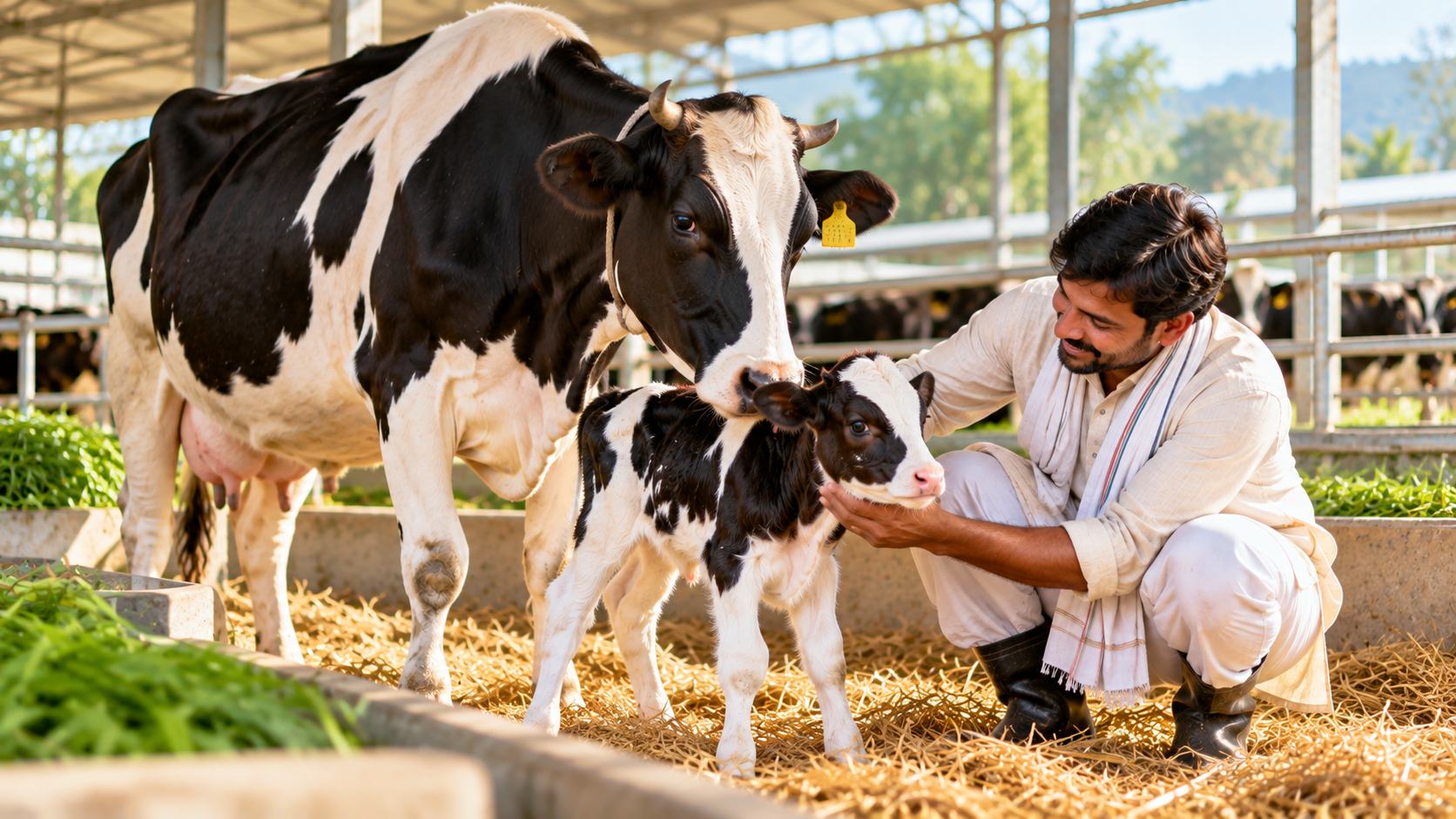
Learn essential newborn calf care practices, including colostrum feeding, clean housing, nutrition, hygiene, health monitoring and disease prevention for dairy farms.
How to Care for Newborn Calves: A Practical Guide for Dairy Farmers
The first few weeks of a calf's life are an important period in dairy farming. Proper care during this stage can support healthy growth and help farmers develop stronger replacement animals for the future herd.
Newborn calves require careful attention to feeding, hygiene, housing, health monitoring and disease prevention. The National Dairy Development Board (NDDB) identifies early colostrum feeding, milk or milk-replacer feeding, calf starter, hay, deworming and vaccination as important aspects of calf nutrition and management.
Why Is Newborn Calf Care Important?
A calf is more vulnerable to health problems during its early life than an adult animal. Good management during this period can help support normal growth and reduce avoidable health challenges.
NDDB notes that proper nutrition during early life supports faster growth and earlier maturity, while poor feeding can contribute to delayed first calving and lower lifetime productivity.
This makes calf care an important investment in the future of a dairy herd.
1. Take Care of the Calf Immediately After Birth
The first few hours after birth require careful attention.
Farmers should make sure that:
-
The calf is breathing normally
-
The mouth and nostrils are clear
-
The body is cleaned and dried
-
The calf is kept in a clean and protected area
-
The navel is properly disinfected
-
The calf is able to suckle properly
If the calf or mother shows signs of difficulty after birth, veterinary assistance should be sought promptly.
NDDB recommends cleaning the newborn calf, caring for the navel and keeping the calf in a protected environment.
2. Colostrum Is Extremely Important
Colostrum is the first milk produced by the mother after calving.
It is especially important for a newborn calf because it provides important nutrients and immune protection.
NDDB recommends starting colostrum feeding very early after birth, while its calf-nutrition guidance identifies colostrum feeding within the first half hour as an important practice.
Farmers should follow appropriate veterinary or dairy-nutrition guidance for the quantity and feeding schedule based on the calf's body weight and condition.
3. Maintain a Clean Calf Housing Area
The calf's surroundings should be clean, dry and well ventilated.
A suitable calf area should provide:
-
Dry bedding
-
Protection from rain and extreme weather
-
Good ventilation
-
Adequate space
-
Clean drinking and feeding utensils
-
Regular removal of manure
A dirty or wet environment can increase exposure to disease-causing organisms.
ICAR recommends keeping calves in clean, well-bedded and appropriately ventilated housing.
4. Feed Milk According to the Calf's Requirements
Milk is an important source of nutrition during the early stage of a calf's life.
The amount and duration of milk feeding should be based on the calf's age, body weight, health and the feeding system used on the farm.
NDDB provides age-based calf feeding guidance covering milk, calf starter, hay and green fodder.
Farmers should avoid making sudden changes to a calf's feeding programme and should seek professional advice when modifying the diet.
5. Introduce Calf Starter and Fodder Gradually
As the calf grows, its diet gradually needs to develop beyond milk.
NDDB recommends introducing calf starter from around the second week and gradually providing good-quality hay and green fodder as the calf develops.
The exact quantity should depend on the calf's age, breed, body weight and development.
6. Provide Clean Drinking Water
Clean water is an essential part of calf management.
Fresh drinking water should be made available according to the calf's stage of development and the farm's feeding programme.
Water containers should be cleaned regularly to prevent contamination.
7. Watch for Signs of Diarrhoea and Dehydration
Calf diarrhoea is an important health concern.
Farmers should watch for:
-
Loose or watery dung
-
Reduced appetite
-
Weakness
-
Sunken eyes
-
Dry mouth or gums
-
Reduced activity
NDDB recommends adequate early colostrum feeding and maintaining a hygienic, dry environment as important measures for preventing calf diarrhoea. Severe dehydration requires immediate veterinary attention.
Farmers should not rely on home treatment when a calf is seriously ill or dehydrated.
8. Follow Deworming and Vaccination Advice
Young calves need an appropriate health-management programme.
Deworming and vaccination schedules should be followed according to local veterinary recommendations, disease risk and the animal's age.
NDDB includes deworming and vaccination among important calf-management practices.
Farmers should maintain a record of every vaccination and treatment.
9. Monitor Growth Regularly
Monitoring calf growth helps farmers identify whether the animal is developing as expected.
Useful records include:
-
Birth date
-
Birth weight
-
Feeding history
-
Health treatments
-
Vaccination
-
Deworming
-
Growth measurements
NDDB's calf-rearing programme emphasizes scientific feeding and management to support growth and earlier maturity.
10. Give Calves Individual Attention
Every calf may have different requirements.
Farmers should regularly observe each calf rather than managing all calves only as a group.
Look for changes in:
-
Appetite
-
Activity
-
Body condition
-
Growth
-
Droppings
-
Breathing
-
General behaviour
Early detection of unusual changes can allow farmers to seek veterinary advice sooner.
Common Calf-Care Mistakes to Avoid
Some common management mistakes include:
-
Delaying colostrum feeding
-
Keeping calves in wet or dirty areas
-
Using unclean feeding equipment
-
Making sudden diet changes
-
Ignoring diarrhoea
-
Not maintaining health records
-
Delaying veterinary consultation
-
Following the same feeding quantity for every calf without considering its requirements
Good calf management depends on consistency and observation.
Building the Future Dairy Herd
A calf is not only a young animal—it can become an important part of the future dairy herd.
Good nutrition, clean housing, preventive healthcare and regular monitoring during the early stages can help farmers build a healthier herd over time.
Scientific calf management also supports better planning for future heifers and replacement animals.
Conclusion
Newborn calf care is one of the foundations of responsible dairy farming.
From immediate post-birth care and timely colostrum feeding to clean housing, appropriate nutrition, disease prevention and regular growth monitoring, each step contributes to the calf's development.
Farmers should follow scientifically recommended practices and consult qualified veterinary professionals whenever a calf shows signs of illness.
At AS Dairy, we believe that building a stronger dairy ecosystem begins with healthy livestock and responsible farm management.
AS Dairy — Building a New Era of Farmers.
Frequently Asked Questions
When should a newborn calf receive colostrum?
Colostrum should be provided very soon after birth. NDDB identifies early colostrum feeding as an important calf-management practice.
Why is colostrum important for calves?
Colostrum provides nutrients and immune protection that are particularly important during the early life of a calf.
When can calf starter be introduced?
NDDB recommends introducing calf starter from around the second week, with feeding quantities adjusted as the calf grows.
How should calf housing be maintained?
The calf area should be clean, dry, well ventilated and protected from extreme weather.
What are signs of calf diarrhoea?
Loose or watery dung, weakness, reduced appetite and signs of dehydration can indicate diarrhoea or another health problem. Severe cases require veterinary attention.
Should calves receive vaccination and deworming?
Appropriate vaccination and deworming should be followed according to veterinary recommendations and local disease risks.